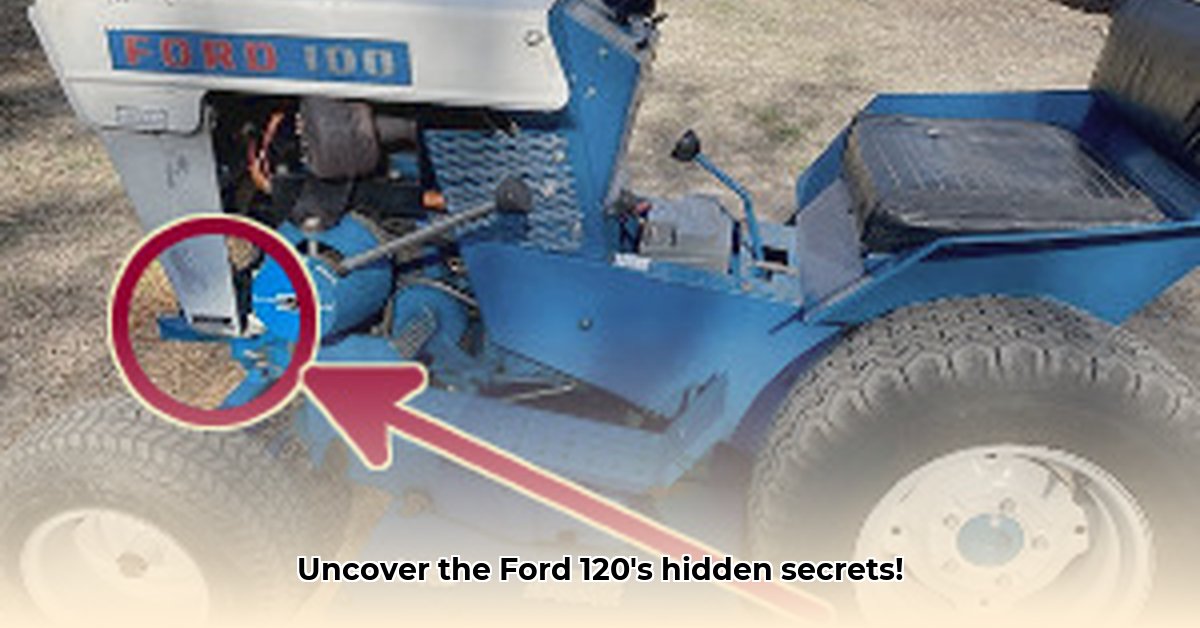
The Ford 120 and its successor, the LGT-120, represent a compelling chapter in the history of garden tractors. These weren't mere lawnmowers; they were robust workhorses designed for serious yard work, embodying the practicality and dependability of a bygone era. This comprehensive guide will delve into the specifics of each model, highlighting their unique features and comparing their capabilities to help you understand what makes them so desirable—even today. For more on Ford tractors, check out this helpful resource: Ford tractor info.
The Ford 120: A Simple, Rugged Classic (1967-1971)
Emerging in 1967, the Ford 120 quickly established itself as a reliable workhorse. Its simple design and sturdy construction were hallmarks of its appeal. Think of it as the original, ruggedly handsome ancestor of today's modern lawn tractors. But what were the key attributes that set it apart?
The heart of the Ford 120 was a Kohler engine, delivering ample power for various tasks. While the exact horsepower varied by year, it was certainly sufficient for mowing, tilling, and even light snow removal with appropriate attachments. Its compact frame, however, made it surprisingly maneuverable in tight spaces. This wasn't simply a powerful machine; it was designed for the nuanced demands of a typical backyard.
A four-speed manual transmission provided precise control, giving the operator direct engagement with the machine's power delivery. And the unassisted manual steering, while less comfortable than its power-steering successors, offered a direct feel and undeniable tactile connection between operator and machine. It was a machine that demanded engagement and rewarded skill. Did this simplicity contribute to its reliability? Many owners might heartily agree it did.
The Ford LGT-120: An Evolution of Excellence (1972-1983)
The Ford LGT-120, introduced in 1972, built upon its predecessor’s strengths while incorporating significant improvements to address user needs. The LGT-120 wasn't simply a refined version; it marked a notable step forward in garden tractor technology.
Perhaps the most immediately apparent enhancement was the substantial increase in fuel tank capacity. The Ford 120's tiny 1.25-gallon tank was a major inconvenience, but the LGT-120 remedied this with a far more practical 3-gallon tank. This meant fewer interruptions, which for many home owners was a crucial improvement. The addition of an optional live rear PTO (power take-off) significantly boosted the machine's versatility. The previous belt-driven system was cumbersome and unreliable; the live PTO added much-needed convenience. Furthermore, the shift to an electromagnetic clutch provided a notably smoother operation compared to the Ford 120's electric clutch. Each of these enhancements spoke to Ford's commitment to improving upon the strengths of the original Ford 120.
Comparing the Titans: Ford 120 vs. LGT-120 – A Detailed Comparison
The following table provides a direct comparison between the key features of the two tractors:
| Feature | Ford 120 | Ford LGT-120 |
|---|---|---|
| Production Years | 1967-1971 | 1972-1983 |
| Engine | Kohler (horsepower varied) | Kohler (horsepower varied) |
| Fuel Tank | 1.25 gallons | 3 gallons |
| Wheelbase | 43 inches | 46 inches |
| Weight | Approximately 671 lbs | Approximately 760 lbs |
| PTO | Standard | Live rear PTO (optional) |
| Clutch | Electric | Electromagnetic |
These specifications highlight an evolution in design philosophy. The LGT-120 was not only more powerful but also more convenient, addressing shortcomings found in the earlier model. But what elements were most improved? For those who valued uninterrupted operation, the fuel tank increase alone made a noticeable difference.
Transmission Systems: A Deep Dive
The choice between a simple manual or a more advanced hydrostatic transmission reveals much about the evolution of design priorities. The Ford 120 primarily featured a four-speed manual transmission, while the LGT-120 offered a more user-friendly hydrostatic option. The improvements were substantial, and the choice reflects the changing demands of the home owner.
The manual transmission's simplicity was balanced by its demand for operator skill. Hydrostatic transmissions, in contrast, offered a more seamless, responsive experience, making them ideally suited for tasks requiring precise speed control. While the manual transmission might have offered marginally better fuel efficiency in some conditions, the convenience of hydrostatic transmission was extremely welcome. This seemingly small difference ultimately spoke volumes about user experience.
Maintaining Your Classic: Preserving a Legacy
Whether you own a Ford 120 or an LGT-120, regular maintenance is paramount to ensure their longevity. Preventative maintenance is key; regular oil changes, lubrication, and vigilant attention to wear and tear are all essential. Finding parts may require some additional effort due to their age, but online communities dedicated to Ford tractors offer invaluable resources and support.
Conclusion: More Than Just Machines
The Ford 120 and LGT-120 are more than just garden tractors; they’re tangible links to a past when quality and durability were paramount. They evoke that satisfying sense of connection to something well-built and dependable. They are, quite simply, classic machines. They represent a simpler time while providing a rewarding experience for enthusiasts and collectors alike. For anyone seeking a durable piece of history and a fulfilling mechanical challenge, these tractors are a worthwhile investment.